Authors Note: I have yet to organise and process all my notes regarding this manuscript, as I originally intended this be a spiritual compendium as opposed to a novel in my Osaka-verse- wow, did we come a long way since those days! I do look forward to when this one is completed, as it stands as reminder of a younger man’s pure, unfiltered, ideals…
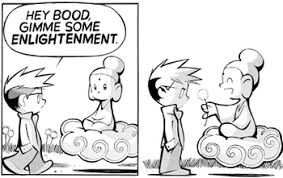
A Personal Journey of Theia mania, Crazy Wisdom, and Divine Madness… A letter of gratitude to my time in Eucla. But readers should remember that this story is about Thomas Kei, not Solomon Li [Me].
When Thomas was unable to make sense of where his life should be heading, he decided to review everything he knew about spirituality in the best place possible- an isolated desert outpost. But it takes a certain resolve to pour through one’s consciousness, to delve into the introspective realm of the Irreal and correlate it to the real world (as he knows it). He takes up an offer to visit Alque, where the people are welcoming, but the land is isolated and simple: a most effective learning environment, free of worldly distractions. What was originally meant to be ’40 days in the desert’ becomes a far longer assignment as the outbreak of the Crown Virus Pandemic puts the world into lock-down, and he ironically becomes an officer in quarantine! But perhaps this was always meant to be, as while examining what is truly philosophically important, he must first remove the routine of cosmetic, skin deep, ideals. In order to determine the metaphysical make up of his soul, he must first remove the make up _on_ his soul, and gaze at the reflection that awaits.
Prologue
“Theia mania, divine madness, or crazy wisdom, refers to unconventional, outrageous, or unpredictable behaviour linked to religious and spiritual pursuits. Examples of divine madness can be found in Hellenism, Christianity, Hinduism, Buddhism, Sufism, and Shamanism. It is usually explained as a manifestation of enlightened behaviour by persons who have transcended societal norms, or as a means of spiritual practice or teaching among mendicants and teachers. These behaviours may seem to be symptoms of mental illness to mainstream society, but are a form of religious ecstasy, or deliberate strategic, purposeful activity by highly self-aware individuals making strategic use of the theme of madness in the construction of their public personas.” – Wikipedia, on Divine Madness.
In the comfort of his armchair, fighting the sleep demons that threatened to overtake his weary mind, Oliver glanced at his phone every few minutes, waiting expectantly. He was a young Quarantine officer, stationed at the great western border, and quite fatigued from the tedium of night shift duties. It was lonely out here, especially as his newly wed wife was still in the capital, and the weeks before their reunion stretched ever on, almost to the point of unbearable. He was a man who stolidly enjoyed sociable habits, not shy nor glib, and often described by his peers as a man who “could walk with kings, nor lose the common touch”: so well-liked was he by the myriad of locals that made up the checkpoint’s nearby settlement, that he was often invited to local gatherings, but it wasn’t the same without his wife. Internet speeds out here were not the fastest, or even always available, but he made do with it and was still in regular touch with friends back in his true home, the capital. Yet today he was excited, and filled with an anticipation, for he was expecting an old friend from his university days, one who should be arriving at any hour. He thought again over the last few days, when a sudden sickness had incapacitated one of the senior officers at the checkpoint, and a replacement was urgently required. Normally a government position, even a temporary one such as the one being offered, would have been eagerly snapped up, but the western border was not known for its abundance of consumerism options. Why, even the land’s native indigenous avoided spending much time here! So, when it seemed as if all the quarantine inspectors would have to pull extra shifts, and work overtime, Oliver thought of someone who would not mind the impermanence of the position, nor the isolation, nor the lack of material goods available: his old friend Thomas.
Unsurprisingly, Thomas did not object to the terms of his assignment as a temporary entry level quarantine officer, and within 2 days of being contacted had made arrangements to travel across the great western expanse to take his post. Soon, he was scheduled to arrive, though his exact whereabouts were approximated, as 2000kms left room for a wide margin of error. At a town halfway through the journey, Oliver laughed when Thomas sent him a message that jokingly implied that he missed the turn off to the Western border, and was headed towards the Southern coastline instead- but he was also concerned that such an accident may still result! Thomas was, and still is, a mysterious and private man who seemed to have dabbled in every random opportunity that came his way. In their younger days, the two had met while sharing a politics class at university, and in the years that followed, Oliver had become an established civil servant, while Thomas was reputedly a sort of spiritualist who maintained a living with all sorts of random work (though in recent years had gained a management position for a small business). He never asked much about how Thomas made his money, for the man was remarkably generous, almost to a fault, and had never seemed to lack any, though he was far from “rich”. Although being 3 years older, Thomas was now almost 31 and may not exactly qualify as a young man anymore. It was funny, as even during his early 20’s, all of their peers had assumed that was well into his 30’s, because of his old fashioned mannerisms, archaic sense of nobility, and the fact that he was relatively affluent, having his own house and regularly hosting dinner parties. He also enjoyed wearing suits. Many suspected he was in the closet as he was never seen with a steady partner, and often did not reciprocate the romantic attention of girls in their social circles.
None of these qualities made him unlikeable, but he was not a very open man and could appear rather frivolous; some, like Oliver, suspected he was hiding his true self, but Thomas was so committed to his persona that no one ever brought it up, even if they did become aware of it. There is a type of Japanese Theatre, its oldest form in fact, called Noh theatre, which involves the use of masks to conceal the true intent of the actors. In such a way, Thomas’ behaviour and ‘face’ were something that Oliver had recognised were merely masks, and when they first met years ago his own natural curiosity had been piqued. Despite the fact that the two had limited common interests, they were capable of extremely candid conversations. Unknown to many of their friends, Thomas had been deeply troubled by some sort of private affair which he did not divulge many details regarding, but Oliver had grasped enough to know that it was of a most depressing nature. The young and tired quarantine officer, who had just finished his night shift, entertained these thoughts as he waited impatiently for his friend to arrive, fighting the urge to pace needlessly, which would have wasted energy. Instead he turned his attention to slaying dragons on his console game, a most pleasantly idle pastime.
It was closer to noon when Thomas knocked on his door, looking tired and rather dishevelled, but equally enthusiastic and happy to see him again. They exchanged a brief manly hug, before Oliver told him, “Welcome to Alque, home of the finest quarantine officers in the land.”
Thomas offered his apologies for intruding on his friend’s rest, and offered to buy them lunch. Oliver accepted, though he certainly did not plan to eat much considering how tired he was. Thomas had always been a dedicated host in the past, when he invited Oliver and their other friends to events, and Oliver was a man who understood the meaning of the word gratitude- he would properly and thoroughly welcome Thomas to his new desert home. He drove them both to the checkpoint office, and quickly pointed out the new working environment that his fiend would officially start learning about on Monday, after spending today and tomorrow getting settled. Thomas’s housekeys were being stored at the checkpoint, which they quickly found after a brief introduction with the checkpoint’s supervising officers. They then made their way to the roadhouse located at a refuelling station/motel combo named Border Village. It did not contain much other than travelling accommodation, next to a complex that housed the café, refuelling station, and a passable tavern. A little white chapel existed alongside, openly inviting all denominations to enter. Oliver was not much for religious devotion, but the building briefly held Thomas’s interest as they stepped inside the café to order lunch. Between them, it was not much of a meal: Oliver ordered a small plate of fried dumplings, while Thomas ordered a box of chips, which he found surprisingly well cooked, being neither greasy nor stale, and so satisfyingly crispy.
“So what do you think?”, the younger man asked, for he knew that the area was modest. Well maintained and not dilapidated, but definitely not luxurious by any means. In typical exuberant fashion, which may or may not have been forced, Thomas excitedly replied,
“I’m loving the place already! Almost as much as I love these chips, though to be honest I’ll be very strict with my diet while I’m here. The whole ambience, the feng shui, it suits me. Plus you’re here, to see you again has made this trip well worthwhile!”
Oliver smiled, a little more at ease, but he knew that in the coming days and weeks, the other man’s tone would likely change. He had spent a total of 18 months out here (not consecutively), and he had accepted a permanent post in Alque simply because it was easier to showcase his dedication, which would further his chances of an eventual promotion. Preferably back in the capital. Thomas was not known for staying in one career path for very long, and so of course he could be considered merely being on a working holiday. Still, a familiar face would brighten the atmosphere, even if only for a limited amount of time. The two had even been scheduled on together for the first few shifts, a concession from the higher ups who recognise that any small comforts out here would go a long way. Thomas’s mood turned more serious briefly, as he contemplated his next words,
“My dear Oliver, I hope you can forgive me, but while part of the reason I accepted this position was because I knew you were out here, I have more selfish and personal reasons for traveling this far. I know you warned me about the isolation, and to be honest, I did not fully realise what that meant until I arrived. Why, our closest shopping centre is over 500kms away, in the next state! But that is precisely why I am out here. You are someone I have always admired, particularly for your integrity and your insight in any situation. Even when you do not know what to do, you know what you should not be doing, and that is a rare trait. When I was previously troubled and became withdrawn, you were one of the only friends who reached out continuously to me, and were actively concerned for my well-being. I’m fine now, I assure you, and I maintain that I was technically fine before, but I deeply appreciate you and your wife’s concern. That is why I feel a bit guilty, because I did not come out to the desert to drink and hang out on our days off, but rather, I am taking the opportunity to practice intensive self-cultivation.” Oliver listened politely, his ego slightly stroked by the possibly sardonic praise, but overall, he was unperturbed, for he knew that Thomas was a man of strange mannerisms, a mix of old energy with youthful exuberance, and it made no real difference to his lifestyle out here. He liked Thomas’s company, but it wouldn’t bother him if his friend was not spending every spare minute with him- they would both need time to recharge, in between work and daily maintenance.
“Yeah nah, it’s all good, I’ll invite you out when I can, show you around, but I get what you’re saying. Just don’t skip work! I put in a good word for you, and you better not make me look bad.” He smiled while saying this, for Thomas was not incompetent, and hearing the joking threat put him at ease.
“Hahah! Yes, you have nothing to worry about, I will be vigilant and not stain the spotless reputation of your border force. Oh, I suppose it’s our border force now? Hah! As I mentioned, I will be strictly surviving on the supplies I brought over from the capital, which will essentially be a rice gruel of my own recipe. But on the last day, allow me to get us the finest meal that this place can offer… er, I assume there are other eateries besides this café?”
“And you’d be correct, my friend. The hotel restaurant back near our houses is pretty decent too, and when I get a chance I’ll introduce you to the other folks who are here, everyone is friendly. The cook makes a pretty mean schnitzel.”
“Okay, it’s a deal! On our last day, we’ll enjoy a real meal together!” Oliver nodded, and as they were done with ‘lunch’, he took them back to the town, and to Thomas’s new home for the next month. It was very well furnished, and there was even some frozen food left in the freezer by the previous tenant. After helping him unpack, Oliver was now well and truly exhausted, and Thomas insisted he go home to rest. The two made plans to see each other once both were rested. As he made his way back, his tired mind processed what had happened in the last 2 hours, since Thomas arrived, and what he heard over lunch was a little unusual but not unheard of. People rarely worried about Thomas, the man’s bizarre charm usually disarmed any real concern. But as Thomas earlier stated, Oliver was a man who saw more than most, and talked less; he was aware that whatever was going on with Thomas in the desert, he would keep at least one watchful eye open for any signs of trouble. Once he had gotten a solid 8 hours of sleep, of course.
Chapter 1- 40 Days in the Desert
The desert attracts a certain type of romanticism, being featured in so many cultures, and perhaps rightly so. Was it not the savannahs of Africa that we trace our evolutionary diaspora to the rest of the planet? Or are we still debating that? It is often thought of as harsh and uninviting, but over time human ingenuity has replaced the extremes of desert life increasingly, and now many deserts are adjacent fully functional cities as well as dispersed settlements. Yet there was a time not so long ago, that going off into the desert alone and without sufficient provisions was considered a death wish. I seem to recall a man who entered the desert at an age not so dissimilar to my own, having left his secular life for whatever reason. He was in his early thirties, and I would assume, based on his culture, that he was a working-class man with a wife at some stage (something I assume as there was no true word for ‘bachelor’ in his language); his people married young by today’s standards… especially by today’s standards! I believe there is a whole conspiracy movement involving whether or not he was married with kids, but I won’t explore that avenue here. This person decided that it would be a good idea to go to a wasteland, or wilderness if you want to be technical, and spent over a month there, alone. It is not surprising that he likely went a little ‘mad’ beforehand, and certainly, if his experiences in the 40 or so days he spent there were to be scrutinised, it would seem rather fantastical. Did I mention he was fasting during that time? That’s the embodiment of commitment. By this point, one would have figured that I am referring to a man who the world knows as Jesus Christ: ironically, ‘Joshua’ was never known as that during his lifetime.
As the tale goes, the messiah was wandering the wilderness, led by a divine force, and was visited on occasion by the embodiment of sin and evil, the Devil. I imagine that the Devil was consistently mocking Jesus throughout his journey, in an attempt to weaken the latter’s resolve. If I understand anything about psychological torture AKA high-school bullying/modern dating, then it was a classic move, a double pronged attack to a person made extremely vulnerable through a lack of sustenance and social interaction. Firstly, he asked why Jesus did not simply turn the stones around him into something edible, like bread, to which he was met with a steadfast refusal to break his fasting, especially as “Man can not live on bread alone”. Secondly, he was transported by his Tempter to the top of a mountain, overlooking a city, reasoning that he could go back to civilisation simply by jumping down, and his God would surely save him from the fall. This was declined too, as “One should not attempt to test the Lord.” Finally, Jesus was transported to a greater mountain peak, and shown the lands beneath him, symbolising the very Earth itself. At this point, he is offered every material wealth and possession, if he would only bow down to the Devil, and worship him. At this point Jesus not only refused as he did before, but commanded Satan to leave him, for he would have no other for his God. Afterwards, angels came to his aid, which may have been for the best as a man who spent 40 days without food shouldn’t be climbing down mountains alone and unaided.
There are a few things I want to note, from a more modern perspective, the most pressing being that Satan sounds a lot like a jealous ex, who tries to manipulate, then bribe, the object of his obsession into coming back. That, or a toxic person trying to demand a relationship from someone who clearly isn’t interested. Story wise, if someone did what Jesus today, we would call them foolish for having gone into the desert without adequate preparations, and we would think it reasonable that such a person starts hallucinating after a few days into the ‘adventure’ rather than accept it as proof of divinity, though I am certain many cults have been founded on less. More importantly, and seriously, I want to state how much I admire how Jesus conducted himself, not as a Christian follower (though I did attend Catholic school), but as a spiritualist who too often wavers in self-discipline. Let us assume that there was no God or Devil, that the person who wandered into the desert was merely mentally ill, or unhinged enough to attempt something so irrational, and ended up hallucinating i.e. from dehydration. That same person still demonstrated enough logical critique to warrant a reconsideration of us labelling him as ‘insane’. Despite the implied starvation, he was lucid enough to argue against the practicality of trying to eat rocks, which the desperate can not always be counted upon to do. Even if he was a little mad, he was not so enthralled by his psychotic break as to jump down a mountain either, despite the almost irresistible allure of society awaiting him. Then there is the powerfully simple metaphysical battle with himself and Satan, who was surely a manifestation of his struggles: to gain the World but lose his soul, was it worth it? At the end of the day, Jesus was clearly a man who refused to betray his principles, even when offered the World. How many could have made the same steadfast choices he did? I do not think someone like this is insane, even if I do not necessarily accept his supposed divinity. At the very least, this could be considered the first true parable of the Gospel, which features Jesus as the subject rather than a narrator- the first step we should take with our faith, in trying to understand our existence, is to look deeply into who we are, what we are capable of, and what we are willing to compromise on. Of course, that is easy to do if we are comfortable and secure, which is probably why Jesus left all of that to expose himself to the harshness of the elements, so that he could find out who he really was. In today’s world, where modern comforts are almost guaranteed in developed nations, how many people willingly leave their comfort zones on a regular basis, and how many lives would be improved if they did? A lot less heart attacks via phone calls/face-to-face interactions, that’s for certain. Conversely, for those who are struggling, how often do we give in to personal weaknesses, only to blame it on someone like the Devil? Maybe Jesus understood that the real spiritual journey is to discover the temptation inside each of us, for the existence of evil, alone, is not proof of a Devil. I suppose by that logic, the existence of good is not proof of a God either…
I am not entirely sure what it was that I had hoped to accomplish, when I left my home in order to come here. This is a desolate and barren land, barely qualifying as a village settlement, and to quote Oliver, not exactly a bastion of life. Yet despite his realistic caution, which was true to his fashion, it was not relayed in a discouraging tone, which is, again, true to his fashion. He, alongside a team of other quarantine officers, was tasked with securing the border route, and I was here because they needed an extra pair of hands, at least for the next month or so. Unsurprisingly, not many people volunteered to be here, so my competition for the job was light to non-existent, especially as Oliver had put in a good word or two on my behalf. It was still surreal to think that I had driven almost 2000 kilometres to get here, and I had only been offered the job, and accepted it, the day before! To most people, it suggested that my prior life was either admirably organised, or appallingly idle. It may seem merely chance, an opportunistic coincidence, but I seized the moment. I needed a lot of time to myself, alone and undistracted. Alque lies at in the middle of the great Western desert, as well as on the impressively inaccessible Southern shoreline, with a terrain that could be comprised entirely by 3 words: rocky, bare, simple. A cruel fate for any socialite, and perfect for someone like me, who wanted to rest and relax, give myself some time to process what I’ve been supressing for a while.
After a day to get myself settled, which mostly consisted of a child-like curiously as I explored my lovely new home, I feel as if I am almost ready to assume my new role as a quarantine officer. But that could have been due to the fact that I was asleep for most of the time after I arrived, and was now filled with a restless energy. I was awake before my alarm went off and, nervously, I get dressed and go through the usual hygiene procedures, constantly patting myself down as I checked my reflection in the bathroom mirror. My uniform was collected in a last minute rush, cobbled form whatever spares were available in the capital, but the sky-blue shirt, navy-blue trousers, and fluorescent yellow vest fits me nicely enough. It must have been the fatigue, but when Oliver drove me to the checkpoint 2 days ago, it didn’t seem so far away- I even considered walking to work if I were ever so inclined. This I reconsidered as I made my way to work, because the twelve kilometres there is a lot farther than it initially appeared. Once I reached the checkpoint, and claimed some empty space near the back for my own, hoping that it would not upset the status quo in any way, I head through the reception to the office of Michelle, our OIC (officer in charge). I suppose she is the one who is supposed to teach me what I need to know, though I don’t even know my own duties yet, let alone an OIC’s!
“Good morning! I’m glad you’re here bright and early- Oliver is on shift with us too, and should be here closer to six. But while we wait for him, let me show you the area properly, and introduce you to the others- Max and Steve are finishing the night shift, so we’re taking over for them.” There are two middle-aged men in the main area, who I can deduce are said persons. Our checkpoint layout is simple enough, with the reception essentially being a tiny waiting room, surrounded by walls that are half comprised of glass panes. This allows for the main office area to be fully visible. Near the back, where our lockers and supplies are kept, the OIC office is a separate room with glass wall, though we cannot easily peer into it as the view is obstructed by a cabinet filled with preserved flora and fauna specimens, no doubt things I would need to watch out for once I began properly working. Our kitchen is on the other side of the wall that divides the main office space, which affords us some degree of privacy from anybody waiting in the reception room.
“It’s not very fancy, I’m afraid, but you’re welcome to help yourself to tea and coffee anytime, it’s just standard bags and powder but we can rely on the caffeine to make our hours a little easier. The fridge is for anything personal that you may want to bring to work. No one uses the stove, but we have a microwave if you want to heat up anything.” As I pay attention to my ‘induction’, I start to form an opinion of her. She is quite friendly and very welcoming, radiating an inner strength despite her small frame- I sense that there is steel beneath the youthful and bright exterior. More importantly, she was treating me in a very reassuring manner, which I find increases my respect for her. Having shown me the environment, we make our way to the windows that face the eastern border. Both of the men were preparing to leave, packing up their various items, but as we approach, they greet me very welcomingly. Both have shaven heads, and are large fellows, instantly reminding me of uncle figures. The one with a thick peppery coloured beard introduces himself first.
“Good to meet you, the name’s Max. I’m new here too, only started a month ago, so don’t feel to worried, it’s pretty easy work once you get used to it.” The other man, who I conclude must be more senior as Max has only been here a few weeks, introduced himself next.
“Steve’s the name, welcome to Alque- hopefully you enjoy it out here, and last longer than the others!” We all laugh, for I have heard tales of the checkpoint does cycle through quite a few officers: Oliver has told me that there was once a young university graduate who had come out for here to start a long-term contract, and ended up leaving the day after without so much as a “Goodbye”. He must have really hated the work, the location, the people, or even a combination of the three!
Michelle ushers me back to her office to discuss the remaining paperwork, mostly just involving how utilities worked, and what specifics my contract entailed.
“So Thomas, as I mentioned over the phone a few days ago, we only need someone for about a month and a half. You’re filling in for someone who actually got into a small accident while on holiday abroad, so while they’re recuperating, you’ll primarily be helping to ease road duties for our Day shift staff. Since you’re not going to be here very long, we’ve drawn up a casual position contract with HR to give you a 20% loading bonus, but you won’t accrue any leave or other benefits. Rather than trying to avoid paying you penalties, this will maximise the money you make in the short term. Makes sense?”
“Yes! No worries, thank you very much, I’m still amazed that the department could process me in such a short time, and I’m grateful for all the consideration you’ve shown me. To be honest, I would have come to visit Oliver sometime, as he mentioned that this place is great for peace and quiet.” She smiles when hearing this, before continuing,
“Well you’ve come to the right place! Though you might reconsider how nice it is, once you spend a little more time here. For instance, our closest chopping centre is in Hanudis, which is about 5 hours away. You can travel there, but it’s best to wait for gaps in your shifts before doing so. On that topic, you’ve probably brought all the food supplies you’ll need for the week, but once you’re out, there are several options available. Most of our staff, thanks to a deal with a delivery company, get supplies sent from the Capital every two weeks, but you also have the option of Mares Town’s grocery store, which you passed on the way here. In addition to Hanudis’s grocery store, you can also call up the Southern Star delivery service, which is located on the south coast of our state.” She gives me a sheet she had prepared prior, listing all of my options, but inwardly I wasn’t too interested- I was going to live on my rice gruel while here, so wouldn’t need delivery options, but it was nice to know, and I nodded my thanks. She continued the briefing,
“Okay, so now let’s talk about the job- first of all, we’re not customs officers, they deal more with narcotics and weapons smuggling. Gosh, I know, it does sound more exciting right? And despite the suggestion of our official title, which is Quarantine Inspector, our jurisdiction doesn’t actually involve human risks such as infections and diseases- we are on the look-out for biosecurity hazards to native plants and animals. Have you ever thought about the disastrous impacts than an invasive species could make?” I am vaguely aware, as I did pay attention in school.
“Ah, yes, things that would affect farming land? Like, the cane toad, or fruit fly?”
“Precisely! Well, our job is to make sure things like that don’t get through and upset the ecosystem. There’s a lot of training involved before you get to that level, and to be honest, it isn’t going to happen in the time you’re here, but you can still protect our borders with vehicle inspections. This is going to be the bread and butter of your job, so I just want you to know that we’ll teach you how to search vehicles thoroughly. Any problems that you can think of, which would prevent you doing it?” I shake my head,
“No, no! I am quite comfortable doing that- er, once I’m trained properly of course… Um, when would I start?” She hands me a stack of papers,
“As soon as you complete these induction exercises, I’ll take you outside and you can shadow me.” She then leads me to my desk, and I noticed that we’ve spent quite a bit of time briefing me already, as Oliver has already arrived, and been manning the roads. I didn’t know if it was difficult to do by one’s self, but he was as calm and collected as usual, and simply processed the variety of trucks and other vehicles in a steady, practiced manner. I am left to my devices for a time, and I am just left to sift through the paperwork, but it is not tedious, as I also found a small book on seasonal pests which keeps my interests piqued- I suppose a lot of people could enjoy reading up on different animals, and I was getting paid to do so. There were common pests, such as Vulpes Vulpes, the common fox, as well as rather esoteric ones like coddling moth, and obvious ones like fruit flies. My induction sheets mainly consisted of a formal review of what Michelle had told me, along with some official paperwork involving my rental lease and utilities bills. It made me happy to see that rent was so cheap, as the ‘town’ obviously didn’t have much of a thriving real estate market, and almost half the buildings were owned by the government. The way electricity and water use were calculated was lost on me, but it could not have been more exorbitant than what I was use to paying back home.
It does not take very long to go through the sheets, and I determined that only the section on permitted items would be of any practical use to my daily inspection tasks. Before long, I found myself with little to do, and started to take in more of my surroundings, suddenly realising that Oliver was out on the roadside by himself, while I was dawdling over ecology books! Glancing over at Michelle, who was attending to business in her little office, I had to make a decision about what to do: how could I be most useful in this situation? It seemed as if an eternity had passed, and I wished that some direction would be given to me. Be careful what you wish for, ask and ye shall receive- Michelle pops out of her office with a stack of papers and seems to have read my eagerness to get into action. She sees how much traffic had built up outside the checkpoint and with a casual smile, remarks,
“Well Thomas, Oliver is holding the fort pretty well, but I suppose we should give him a hand. Ready to go and try doing inspections?”
I nod vigorously, pleased to be active and assisting some of the load from my poor friend who performs his duties almost too stoically, clearly hiding his relief as we the cavalry make our way outside. Michelle raises her voice to make herself heard, as Oliver is on the outside lane, which is farest away from the two undercover ones,
“Have you done these ones?!” she says, while pointing to the caravans and cars waiting in cue. He gestures that the one closest to him has been, but none of the others, and Michelle gets me to watch her as she banters with the driver/passengers, and I take mental notes, observing her method, and corresponding them to the information sheets I had been reading prior. It’s one thing to read about the procedure, and a different thing to do it, but I am able to make sense of her approaches and the checklist of inspection points were being gradually absorbed as I prepared for the moment when I would be doing this solo. Not too soon, hopefully, as I was no where near as confident as Michelle and Oliver, who I glance over to occasionally to compare with our OIC. Of course, there wasn’t much to compare with him once he stepped inside the caravans, out of sight and, therefore, out of range for my scrutiny. Funny, how in school we were not encouraged to copy off our classmates, but in the workplace, and Life in general, mimicry is probably the most common and practical way to learn new information. Eventually, Michelle, ever so gently, asks me if I would like to give it a try while she watched me do what I had literally been exposed for the last 20 or so minutes. Swallowing hard, out of minor anxiety, I grin widely and as enthusiastically as I can,
“Sure thing! Hopefully you won’t have to hold my hand for too much longer haha! She laughs, amused at my joviality, and explains to the next vehicle that I am still green and is under her guidance. So far, I must say that the people coming through have been very understanding, even the more dishevelled ones, and I took comfort in the noblest elements of Humanity on display. Yes, it might have been my first day, but I knew that the desert was where I was meant to be at this point of my life one where I could forget all about the one before I came here.
Chapter 2- Buddha and the Monkey King, Sun Wu Kong
Long ago, in a different time, a different land, there was a prince yet unborn, whose birth was anticipated by the royal family and holy men alike. Our young prince was named Siddhartha, and he would become more famously known as the Buddha, or Enlightened One (though it would not be entirely correct to call him the ‘first’ Buddha). It was prophesied that the Prince would either become a mighty King, or an extraordinary sage. His father had wanted his son to grow up to inherit the family business, a.k.a. heading their dynasty, so ensured that his son would never be exposed to the reality of suffering, believing that a life of pleasure would discourage spiritual vocations. However, in time the young prince grew disillusioned with his life and renounced his upbringing so that he could study from spiritual teachers. Nothing seemed to offer a permanent solution to his existential angst, and even extreme forms of ascetic practices, resembling borderline masochism, failed to offer him his salvation. Stories tend to become varied as to how he finally managed to achieve the state of Nirvana, or divine spiritual bliss, but the themes all agree that while accepting that suffering was a part of life, it was not the point of it; if the latter was reversed, we may have seen Buddhism become a more pessimistic religion. Siddhartha became the first idea of a Buddha, someone who had left the cosmic rat race behind, and attained true spiritual freedom. His followers were advised to adopt a moderate approach to life, the Middle Path, and they in turn introduced a lot more rules and doctrines, based on their interpretations, for subsequent followers to subscribe to, as all religions eventually do.
The tale of “Journey to the West”, regarded as one of the four greatest works of Chinese literature, It would take years to fully cite the deeply ingrained ancient cultural references, and at least decades to appreciate the richness of spiritual culture that could be gleamed from the chapters. Yet one scene in particular is worth exploring for the purposes of enlightenment, and that is when Sun Wukong, the Monkey King who claimed the title “Great Sage equal to Heaven”, met the Buddha, or at least a representation of the Buddha as a pinnacle of omnipotence. During this encounter the naive monkey rationalised that his great martial prowess and supernatural powers entitled him to the right to rule heaven. I should note that in Chinese, the expression of the entire world, before we came to think of the world as a planet, was “All under heaven” which basically meant everything in the world. So ruling heaven was the equivalent as being the highest authority in existence. The buddha asked him to demonstrate his self evident might in the form of a jumping contest, and su wukong gave 3 attempts to out do himself, to the point where his final and best jump took him to the edge of the universe where 5 pillars stood, and which he inscribed his name as a testament to his own accomplishment. Upon his return to the buddha, the latter revealed how sunwulng’s best efforts did not even eclipse the buddha’s palm, and that the scope of his own power was far greater than sun wu kong could comprehend. Thus the monkey, who glimpsed his own insignificance, was imprisoned by the buddha for several hundred years under a mountain, until the day came that he would be able to work off the crime of arrogance with community service.
This is the scene that I wish to discuss, for it can be interpreted in different ways. There is a Chinese proverb that states ‘the monkey never escaped buddha’s palm” which is a caution to aspiring students, usually of the younger and self assured variety, that they must recognise limits that could not currently comprehend. It could also apply to students who thought they knew better than their tachers, which isn’t impossible, but statistically unlikely. An attempt to humble the proud and precocious, maybe. Some might view it as a flaw, of the oppressive power that authorative figures have over free spirits and unbridled creativity. In my opinion, that is merely self serving, and anybody who seriously thinks this has unresolved issues with authority. Over the years, I have pondered over the mesaage of the tale, which has made me consider what it means to escape buhha’s palm, which I liken to a purely 2 dimensional figure trying to traverse it’s 2 dimensional plan until it reached the 3rd dimension. An impossible task, if performed literally, and a puzzling one if we view it figuratively. I’ve thought it over and realised that (warning, spoilers) the monkey never actually did leave Buddha’s palm, but he did transcend it. In the same way, a drawing on a page never gains true access to the 3rd dimension, no matter how skilled the artist, but that does not mean we can not add depth to a picture; the ultimate secret of escape lies in comprehension.
“Very good Thomas, I should give you a pair of chopsticks!”
“Excuse me?”
“You know, like in The Karate Kid?”
“Oh! Hahah, yes sure, provide me a pair and I’m game!”
The flies were incessant and a major irritation to all living in the desert, and as a city boy I was not exactly prepared for that: an oversight which Oliver merely shrugged off as something I would eventually become accustomed to, in time. As it was a slow day, and I was keeping myself occupied with a self-tasked duty: vacuuming as many flies as I could with our handheld Dyson. At first it was merely busy work, as there were two other officers manning the road, which consisted of commercial vehicles I did not have the training to process, so I was left to make myself useful indoors, while Michelle was occupied with her figurative and literal mountains of paperwork. This was when I came up with the brilliant idea to clean up the scattered bodies of dead insects around the office, a game which soon consumed me as I was possessed with an urge to purge, our workspace must be free of all pest lest the noble image of quarantine inspection be tarnished! Okay, maybe the frustration of those things were starting to get under my skin… those annoying little parasites! Breathe… breathe… all life is precious, even if we can’t understand it.
Chapter 3- Removing Human Instincts and Desires
The concept of ascetic practices has become synonymous with removing desires of the flesh. Sexuality is normally suppressed in pursuit of spiritual cultivation, and it is common to find practices that are designed to control human emotion and the urge for human connection, though often intended as a form of torture. While I could draw upon real life groups, instead of making an enemy, I will merely cite a common example that will allow me to stay in the safety net of hypotheticality: the Jedi Order of Star Wars. If we were to hear about a group that took children away from their families to suppress their natural urges and human instincts, to serve a ‘Greater Good’, then the word “cult” springs to mind. If this was your childhood, then forgive me for opening an old wound- these never fully heal, so you might as well learn to live with it. We even see this presented as propaganda in the prequels: their depictions as a benevolent order are challenged, then distorted, parallel to the real world view that cults are generally dangerous and extreme (sometimes even extremely dangerous!). As Chancellor Palpatine convinced Anakin, “The Jedi are trying to take over!”.
Denying a feeling makes it stronger, repression usually leads to some rather unexpected outbursts. Anyone who has tried therapy would be well familiar with the relief of unloading mental burdens, but sometimes there are pressures that can not be alleviated so easily, especially when it comes to self-identity. Perhaps you have played the stoic game with friends, when younger, which is a person trying to maintain a composed facial expression while others attempt to make them laugh- it echoes the earlier point about how feelings can not be contained indefinitely. In fact, I have found it easier to win the game if one does not repress what triggers themselves, but instead allows it to flow through them, now much less affected by the pressure that builds within, to laugh simply because it is almost instinctual. Historically, there have been societies which attempt to control certain emotions and instincts, which frown upon certain behaviours such as too much laughter, which psychologists have framed as a display of a superiority complex, a sign of one’s baseness, or even suspicious due to the way humour is often used to deflect and hide one’s true self. Of course, these days humour is something we simply cannot have enough of, as the rise of Stand-Up Comedy will support. However, what has not changed is that the successful comic is not only an entertainer, but a psycho-analyst and a philosopher under the guide of common appeal; foolish indeed are those who believe a Fool is only such.
When I was younger, and misunderstood the path of sagacity, I used to think that removing all my human emotions was the correct way. Being void of basic human instincts is something that is usually depicted as a trait of psychopaths, a word that has such shifting meanings in mainstream culture that I’m not going to bother with providing a “technical” definition. Still, I do think that if a truly encompassing definition were to be provided, then it still wouldn’t benefit the “normal people” who view the world in their normal, default way, and could not comprehend it outside of those limitations (not that I deliberately use the word ‘normal’ as a pejorative). But of course, perhaps the psychopath is the one who is incapable of viewing the world in the normal way, and so are rightly stigmatised. Compassion, kindness, altruism, and love, are feelings with counterparts such as malice, sadism, apathy, and murderous intent, so it may make sense why those who walk the path of seeking enlightenment decide to stay away from the realm of emotions altogether: it is possible that one could choose to only indulge positive urges, but to reiterate the point, surely only psychopaths have an easier time doing that. I may have come up with a way to transcend the realm of human emotions, without becoming a robot, but I fear it may be rather dangerous… In the meantime, I’ll chalk it up to a case of “glass half empty, glass half full”, and I will just Laugh.
I think that, in many ways, I do not enjoy the act of eating, even if I take to it with a fervour. Maybe that is why the foods I generally eat have been ‘weird’ and often bafflingly innutritious, at least until I started dating Laura, my first girlfriend, when I was 17, and we took to teen love with all the emotional naiveté that accompanies navigating that field. If I were to be completely honest- she probably allowed me to get the closest I ever came to becoming human, much like how Enkidu took on the form of a mortal by “interacting” with a divine priestess. How many people have read the Epic of Gilgamesh? That memory of eating foods a prepubescent boy would find intimidating, after I had dinner with her family for the first time, filled my body with a strange sensation, a metabolism that I may have remembered as a little boy, before I gave up meat (aside from the fish burger at McDonalds, which we all know doesn’t qualify as real food). It was steamed fish, Chinese vegetables, and a strong Cantonese soup: that was the first meal I ate with Laura that wasn’t take-out. Afterwards, my body realised something- it was technically starving. In the years that we would have together, Laura and I tried many restaurants, many different cuisines, and I grew to understand what I enjoyed versus foods I knew I wouldn’t enjoy… I remember how surprised Vik’s family were, for we had been friends before Laura came into the picture, and I had occasionally dined with Vik at his home, although at that point I only ate bread and potatoes specially prepared for me, the latter which were unfried as Vik’s mother was a nurse who advocated for healthier diets. Even more so, I recall the shock my father’s friends expressed when I told them that they wouldn’t have to make chips for me at one of his workplace gatherings. My parents were glad I could eat meats, and my xuang di’s mother seemed to take pleasure in how much I liked her salads.
My father, and Laura… the two got along, and he saw in her the well-bred young lady of a proper Chinese family, so unlike his own children. At first, I thought nothing of it, but it was only after Laura and I had broken up that I remember his strange looks, when he came to pick me up after Laura and I finished studying together at her home, and finally realised that it was shame… my father was all too conscious of how he appeared when he came to collect me, his son, from Laura’s double storey home in a prime suburb. It was too late that I realised, how ashamed he was of his haggard demeanour, and his old car, so unlike Laura’s family’s luxury sedans, and of course the smell of a man who was covered in grease splatters. When he told me to wait for him outside whenever I wanted to be collected at her house, I recall how puzzled I was that he didn’t simply knock on the door, but I get it now: my father wanted to maintain his dignity as well, and it’s harder to do so when confronted by the stark difference in her family’s living standards as opposed to our own.
I guess I never saw it, because I do not place the same innate value in materialism that virtually everyone else does. My small childhood room was always cold in winter, so I learned to regulate my body heat to not freeze. My own bed, a shabby single mattress over a cheap metal frame covered in years-old frayed sheets, was never something I resented whenever Laura and I lay on her soft, fuchsia queen mattress, in her spacious upstairs room, which her sisters were also afforded. The money I earned was given away to support my household, on dates with Laura and to bring whatever joy to high school friends, who I now know also realised lived similarly to her; it was a private school, after all, and although I didn’t recognise it at the time, I was merely a jumped-up scholarship boy from a large migrant family, pretending to fit in with my peers… Let me make this clear, however- I was happy enough in my own way, and take great pride in not being a spoiled middle-class brat, unappreciative of what little I do have. After all, I was a prodigy, unfathomably cultured and precocious, who practiced spiritual cultivation- anything that could be bought with money was worthless to me, and anything I desired I could simply earn through my own efforts. Why covet what others have?
Unfortunately, that wasn’t enough for Laura, and I could not adequately explain to her, back then, why I could not take steps to live the life she envisioned together. It was not as simple as I was too poor for her, but she was right- as an adult, I understand how not having time and money, and seemingly no ambition, is completely unfair to her, or anyone in a relationship. But of course, such emotions are beneath an enlightened man, right?
There is a Greek concept called Eidos, which means the idealised form of something, and which reality often falls short of meeting. It explains why the idea we have of something is disappointed that the real version of it is underwhelming, lacklustre… never meet your heroes, right? Still, there is something positive about eidos, specifically when it came to my diet- the bread and potatoes and soda I imagined as banquet items, as meats I had yet to try, of dishes that I had only heard of, of vintages I would latter understand I disliked… ALL of the real dishes I ate fell short of what I imagined that they tasted. As Winston discovered in 1984, actual wine was somewhat disappointing after years of gin drinking. And if all we experience is merely a hallucination of the mind, does that not mean that I should pity all those who would never understand the culinary heights I formulated, and savoured, in my mind, while living off buttered bread, soy rice, and fried potatoes?
Chapter 4: Diogenes the Dog [Cynic]
Alexander the Great is a household name, whose fame echoes throughout time. With such a moniker as great as his, we should ask ourselves who his primary teacher was, someone I consider a western equivalent of Confucius: Aristotle. Both of these philosophers are regarded as Master type figures, with ideas that shaped the next thousand years that they lived in (for better or worse). In fact, it is due to the relationship build between Aristotle and Alexander that classical literature (essentially Ancient Greek and Roman culture) has lasted until contemporary times. Yet the philosopher who I am about to mention is not as well known as these two, yet was considered by alexander as the most enlightened man he had met, and that person was Diogenes, known as Diogenes the Cynic, also known as Diogenes the Dog. This person denounced the conventions of his society, and would have been regarded as mad in any era he lived in, as he is often depicted as a naked man in a bathtub who lived like an animal, and was still coherent enough to have intellectual discussions with his peers. Why was he referred to as a dog? Well, he admired them enough to live like them: owning little, debasing himself in the streets, and for all application of the word, completely shameless. To say that he was not proud of his shamelessness is an understatement, for his views, in fact his very philosophy revolved around an authentic living that would not garner much intellectual respect until after his death. Yet, can we really fault a man for emulating Man’s Best Friend? Even Mark Twain, a modern spiritual peer of Diogenes, is quoted as saying,
“If you raise a dog from nothing, feed him, and make him self sufficient, it will not bite you. The same can not be said of a person.”
So we can safely assume that Diogenes valued authenticity, and scorned the hypocrisy of his time, especially as beggars, considered no better than stray dogs, were often at the receiving end of polite society’s many unkind abuses. This outrageous sage was not always like this: he came from a relatively well off background, until his father, a prominent civil servant (at a Mint), lost his job due to accusation of damage to Mint property , and both father and son would find themselves imprisoned. The father died in prison, but Diogenes managed to escape, though now he had lost everything he used to have…
At the time, philosophers were seeking to gain political power by acting as advisers to those who held authority, often during their role as teachers or by being sough after owing to their reputation. Diogenes saw this, and disowned the practice, resolving to have no possessions other than a begging bowl which doubled as a drinking cup, and to live according to his natural instincts with little regard to what others thought of him. There is an account of him viewing a young boy drinking water using his hands cupped as a vessel, which caused him to smash his bowl to bits, and follow suit. I must make it clear that he was not insane, though clearly not of normal societal conventions, for he was actively unconcerned about interacting with others, and not the type to use the rejection of rules as an excuse to wreak havoc on society. This is a distinction to be made when we discuss crazy wisdom, because no form of enlightenment exists which actively seeks pleasure in harming others, even if the idea of harming others is entertained, and the occasional act of harming others is a necessity.
When Alexander the Great encountered him during his conquest campaign, he immediately recognised the distinct wisdom of this naked man in a bathtub who rejected the gameplay of his society, and ascribed to his own. Upon being offered anything he desired, Diogenes simply stated that if he could have anything, it would be for the conqueror to move aside, so as to grant his access to the sunshine. In fact, when captured by Alexander’s father, Philip of Macedon, Diogenes heckled the ruler with the same indifference he would to someone accompany his jail cell, and Philip was as impressed as his son, to the point of releasing Diogenes! Perhaps the moral of his story is: When we are not afraid to go against what society expects of us, we can truly know and be ourselves. Diogenes probably couldn’t have cared less about such trifles- how I envy him…
All I owned in the world, at present, was with me. My car, my few possessions either in the car or at my government-provided housing, and myself; the latter is arguably all I ever truly had in life, and not even that. After all, before accepting this position in the desert, I was preparing to become a priest in another country. Then, tragedy struck, and I could move neither forwards nor back, and chose to live in my car for the past month. No, it was little more than that, but not quite two… my memory had been hazy during that period, which was rare for me. Almost refreshing, but even so, I still recall everything that led up to me being voluntarily homeless, including the seemingly unending periods of nothing that accompanied me for most of my time being homeless.
Despite how it may have seemed, my previous living situation wasn’t particularly onerous, and I wasn’t particularly in want of any necessities. Maybe some would criticise me for not simply finding new accommodation- despite giving most of it away for the funeral and the welfare of my niece, I still had some money, for what little good it did me, mostly in the form of my returned rental bond, and my final pay check. It would have been enough to survive until I got a new job, which wouldn’t have taken long considering I have never had trouble whoring myself out for labour. Unlike most people in temp work, I did not abuse substances, got along with others, and could be counted upon for more complex tasks without the need to spend too much training… and, of course, I could always get rehired at my old place, if I so chose.
The season back in the capital was quite cool, and I had access to public toilets, running water, even freely accessible showers from various public places… My body does not produce filth at the normal rate [of an average person], and I am proud to reveal that even with all the exercise I did in the past, I have never needed to use deodorant- in the rare cases when I sweated, it was minimal, evaporated soon after being expelled, and left no unpleasant odours. I recall a study, done on Koreans, but also applying to East Asians (of which is my heritage) that there is a certain protein, or lack thereof, which cause most East Asians to not produce foul odours in ordinary strenuous circumstances. It might be genetic, or it might be my own esoteric training over a lifetime of cultivation, but for whatever reason, I rarely became ill, unless it was sourced from within, like my recent gout attacks. Those worried me a little, as they have been getting more frequent as time passed, and I wonder if the next one would cripple me… a crippled me has even less reason to be around, and I daresay that I would opt out of being a burden on society. Of course, if it came to that, I would settle all my unfinished business first, but on that note, what unfinished business do I have left?
I have already said goodbye to Naomi.
I have come to terms with how I feel about a lot of things, and people. My story was also shared with my ex-betrothed, and having someone share that weight allowed me enough recuperation to get on with life. As I said before, I can neither go forwards, nor backwards, for I am already in my 30’s and I have very little prospects considering most of my adult life was spent looking after my family, and working odd jobs to support them in between caring for them. No sane girl would date someone in my position, and I wouldn’t want them to, not after understanding from Laura how much of a sacrifice that would be. Do I simply watch anime and eat hot chips until I figure out what I want to do? That doesn’t sound so bad!
No, wait, I am forgetting something: I have a young life who could really use someone like me, at least until she became old enough to fend for herself… my dead sister’s little girl, whose father she would probably never know, from what I heard, and whose future could still be salvaged. Yes, that is my answer: become a shield for the next generation, just like I was, just like I have always been. What could be nobler and more appropriate than that? Sacrifice is the only kind of love I have ever known, after all.
Chapter 5: Genius is merely Abnormal Thinking
Real genius is always going to be misunderstood by the masses: to what degree does genius become madness? I suppose that the two are not mutually exclusive, for there is certainly an overlap between the intellectually inclined and a certain disregard for convention. On the topic of cleverness, could an extremely knowledgeable person be considered enlightened, or must there be a spiritual component that is catalytic? For if someone were to absorb all the ancient knowledge and wisdom and fables, then would that be a direct and studious path towards personal ascension? Self-cultivation is about self-improvement, which is tackled differently by respective societies and individuals. There is a truth in education equating to more freedom, for a more educated society tends to be a more civilised society. However, the idea that civilised is enlightened should not be equated, for one is the form, while the other is the essence of transcendence. So that is to conclude that someone who has all the facts may not necessarily be more ascended than someone who has never heard of great philosophies. We have all heard of people reaching a great realisation, the term is ‘epiphany’. But who has heard of the term, ‘apophany’? Owing to the human mind being biased towards seeking patterns, it is not unsual for people to make sense of things that do not any actually make sense, to see patterns where there are none, but may seem so at the time. An apophany is a logically* invalid realisation that is essentially a false epiphany. Questioning anything, and doubting everything, is a topic of discussion for another time, but I wondered to myself over the years: when does feigning madness cross over to real mental illness? How would someone even know? How do I know I’m not sick, and if I am sick, would that even matter if I was truly self aware? I live in a time when the ideas of gender and sexuality are being constantly questioned, and are constantly evolving. That is not to say that it did not occur before my time, but my contemporary society is one which features many discussion points revolving around the ideas of traditional forms of identity. Politically Correct (PC) culture has surged and is fighting oppressive tradition, but practical realists are pushing back against the insistence of universal inclusivity. A while ago, I rationalised that if I identified as a lesbian woman in a man’s body, would I that create any functional change in my dating habits? Is it merely a case of semantics if I am overly concerned by the labels of my existence? Then there is a niche concept known as Trans-ablism, which is a term that transgender community do not like being associated with them: it refers to people who view themselves as disabled people inside healthy bodies. Such persons may attempt to main themselves inorder to align their physical bodies with their mental perceptions of self. This includes the removal of limbs, and even splashing acid in their eyes because they think they were not meant to have functional eyesight. Ordinarily, this is self harm, would be viewed as a mental illness, and is currently being treated as such, but the parallels between that and transgender surgery are not lost on me. Personally, I do not have a particularly defining stance, for I see the journey of self discovery and personal cultivation as intrinsic to the individual, but I do believe in the duty of each citizen to make society better for future generations. Whether or not these ideas will become a cornerstone of future society is matter for time to decide, but in the meanwhile, I daresay we should not forget to treat each other as human beings.
*Logical rules are formed by the Premise and Conclusion of statements, which may or may not be invalid. It is an exercise to recognise the prevalence of logical fallacy in arguments. For more in-depth explanation, I’d recommend ‘Elements of Reasoning’ by Ronald Munson and Andrew Black, which I thoroughly enjoyed when I was both on my inter-high school debate team, and during my time studying critical reasoning at university.
Some people think that they are too good for certain kinds of work, such as cleaning or customer service. I have worked in both, and I knew that, unlike some of my colleagues, I didn’t need to be there forever. Also, unlike a lot of my colleagues, I worked such jobs deliberately, not for money or advancement, but simply to observe. Does this sound as strange as it does? Perhaps growing up in poverty had made me more resourceful when it came to amusing myself… on that train of thought, any carcass that was disposed of out here wouldn’t be uncovered for an indeterminately ambiguous amount of time, and the wild animals out here would surely make short work of any fresh meat presented to them.
Even if I am not overly fond of waste, I must say that one could almost admire how junk seemed to accumulate even in the desert. Back in the capital, Oliver had already told us stories about the massive open pits here that served as a dumping ground, but when I first laid eyes upon “The Tip” as the locals called it, my childish sense of wonder was piqued, and so was my guilty pleasure of scavenging. A good citizen must aim to leave any place better than when they found it, and so on occasion, usually in the late afternoons where I could be afforded cooler weather and more shade, I went about collecting trash around Alque. It wasn’t that the place was in anyway littered with refuse, except perhaps at the petrol station, which saw the most public thoroughfare, but I simply wanted to keep busy while I wasn’t at work. However, I soon found myself with trash bags that had no suburban infrastructure to collect them at regular intervals, and as such I had to drive to the dumping zone.
I got into my little car, which had made the journey here in an almost perilous manner- it was a hatchback that was designed for city life and streets, not dirt roads and continuous highways, but she made it in one piece. The countryside view was really nice, if monotonous, and I could already envision what life was like when people used to live here in the old days. Apparently this place used to be a telegraph station, a very important but now obsolete piece of the information relay between this country’s East and West. Just a hundred metres or so across the border, as I passed through the checkpoint, I saw the disjointed and laissez-faire system of waste disposal, where the cleanliest option involved fire: I did not bring anything to start one on this trip, but I suppose I could simply dispose of the bags I brought along and none would be the wise.
After sometime ruminating amongst the trash heaps, I couldn’t stand the flies any longer, and I waved them away as best I could before climbing back into the car. I had read about Chinese companies that were making a fortune from salvaging valuables from western dumping grounds, a testament to the prodigal nature that Capitalism afforded the modern citizen. Call me crazy, plenty of people have, but I harboured a far fetched dream to do something similar, one day so far into the future that I could not yet imagine it… I wanted to clean up the world, to burn/process the waste and recycle whatever was possible to repurpose, maybe even solve a few lost jewellery mysterious, and quite possibly many more missing persons mysteries. In fact, I coupled probably solve unemployment if there were mandated volunteers, or state-sponsored workers, all contributing to this great cause. Penitentiaries and Unemployment centres would no longer be a place to waste tax payer dollars, but instead would provide a workforce that could tackle such glaring issues. Eventually, we could expand upon the premise to have them address other things- and the people would be happy for these Work Farms… oh God, I put the air-conditioning on full blast, and my head begins to clear a little as fresh air begins to fill my lungs.
Chapter 6: Love?
Who has never been in love? It is one of life’s greatest blessings, and one of life’s greatest tragedies. Countless others throughout the ages have expressed what it meant to them, but I daresay that a holy man speaks of love in a cosmic sense, as opposed to being in love, which constitutes a worldly attachment. Perhaps it is only my personal experience, but the feeling of truly loving someone could be likened to enlightenment, the nirvana of bliss. Even unreciprocated, it can be appreciated, and even falling out of love, those feelings felt are eternal, no matter how residual. To address whether or not selfishness is a part of loving someone, we must question not the supposedly purity of one’s feelings: I do not advocate unchecked limerence. Although others have said it best, when you do love something, or someone, you want what is best for them, and any parent may vouch for this statement. I admit, this does not always translate so well, for good intentions for an adult may or may not be helpful to their child, which any teenager can vouch for.
I ran from love because I knew it would destroy me- Franz Kafka
I ran into love because I needed it to destroy who I used to be- Fyodor Dostoevsky
I have read of the great scholars, and the undying poets, and the awakened philosophers, and have compiled many accounts of what such loving feelings mean to the human condition. Yet, what is second hand emotion, compared to an organic, spontaneous experience? Holy men tend to abstain from worldly attachments, without condemning them, and the search for true love remains the quest of the starry eyed youths. I have an experience that I wish to share, when I attended the wedding of friends, finally joined in matrimony. The wedding vows were always pretty and authentic, the receptions were always lush and serene, and the food always a joy, but the moment I witnessed universal pure love was always in the dance between bride and groom. Soft music caresses as gently as the couple, who are surrounded by friends and family, yet separate in another time and space. To see that tenderness and undiluted happiness exchanged between the eyes, so deserving to be called ‘windows to the soul’, fills the room with a cosmic harmony renders me speechless, summoning forth sweet tears from my eyes. And as the music fades, the ambience is breathless as a kiss exchanged speaks of the glory, the power, the truth of love…
What ego is there, what envy remains, how is the soul not unburdened (however briefly), when we witness such a miracle?
Olly and I are sitting in the main office area- it’s just the two of us on this evening, but we do not expect it to be very busy, even for a Night Shift, because the cargo trucks tended to have a schedule, which we were currently in-between. Even though he did not insist upon it, I cleaned and tidied the whole checkpoint, as well as giving the bathrooms much needed love: I was once a cleaner at a public school, and still recall the heated arguments staff periodically engaged with regarding the toilet allowance, a small sum paid for each toilet we cleaned on top of our wages. Apparently there was once a small scandal over a Cleaner In Charge who had once claimed all the riches that the accumulated allowance afforded them, with the corruption coming to light and forcing a change of management. It amused me, as fighting over scraps was not something I considered dignified, and somewhat reminded me of my parents when I was younger… Jim and I had worked there together, and from what I knew he was still working there to this day despite having finished his degree. The job market for his field was currently in a slump…
Speaking of slump, I maintained good posture in my chair, but Olly’s form was sunken and misshapen as fought off the tedium- all our paperwork, the data entry and forms, had been taken care of by us too, so we were essentially getting paid to sit on our arses until the morning crew came in. However, this was not unique to us, as everyone of the veteran officers here maintained that we were being paid for our time, not what we did on the shift, and that we were criminally underpaid, just like every other department in government. In a bleary voice, Olly breaks the comfortable silence and casually says to me,
“Oi, Tom- Mona says ‘Hello’, and hopes you are still here when she comes to visit.” Beaming, I boisterously reply,
“Awesome! I hope to see her again too! Ugh, when is that, again?”
“Hmm? Oh, uh, let me see… a few weeks? You should still be here- the assignment was for 6 weeks, and I’m pretty sure you’re 2 weeks in as of tomorrow.”
I nod approvingly that even while brain dead, Olly still has the mental acuity to calculate when I had arrived, and when I would be set to leave. Or at least, when I thought I would be set to leave, but that is a matter from later.
Chapter 7: The Mad Monk Ji Gong
During the Song Dynasty of China, there was a famous monk who was considered mad, yet whose tales of spiritual mastery and philanthropy are still told today. He is more commonly known as Ji Gong, the Mad Monk, but his actions, while bizarre, were effective, and understood when displayed in their entirety. People described him as a mendicant style monk in shabby clothes with a penchant for wine and meat, despite these normally being considered taboo for devout Buddhist monks. Still, he never failed to prevail against the forces of human vices, corruption, and even human ignorance, and was highly sought after by those in need. He liked playing jokes, was not above engaging in ridiculous behaviour, yet was high literate and noble in his deeds, which greatly benefitted people of all stations of his society. If I may briefly analyse his profile, I can not help but think of his wisdom in concealing himself via an unspectacular presentation of Self, for like many others before him, he was almost determined to display his unorthodoxy to make others question their own adherence to orthodoxy. Indeed, many people initially shunned him for his unimpressive looks, yet revere him as their teacher once his actions demonstrated his true self; he was not insane, because his actions are always revealed to be highly deliberate and relevant to the situation, despite not being immediately apparent to sane people. His stories are certainly entertaining, especially as his roguish character exist parallel to a remarkably enlightened consciousness. But amongst the tales I have read of Ji Gong, there is a verse that comes from a song he sings to no one in particular, which stands out to me in my search for enlightenment. It goes as follows:
“…Though I may seem strange to you,
You do not seem strange to me.
I am like the rest of you,
Bound by Karma’s Chains.
Though my shackles may seem much lighter,
I know each link by name.
If I am mad, perhaps I am.
Driven mad, by Karma’s chains..”
For me, I listen to what is echoed by the tones of his verses, and I sense that Ji Gong did not considered himself superior to others, despite having godly supernatural abilities, for he could perceive the interconnectivity of existence. I also believe that he does not use the word ‘mad’ to refer to how others perceive him, but his despair at being able to see so simply what others simply find so difficult: that same interconnectivity of existence.
It has been hot today, something that I’m not overly fond of, but have accepted as part of the land I grew up in. At least we were mostly shaded, and enjoyed the occasional cool breeze of the coast. Many of the travellers who passed through would trade conditions with us in an instance, especially as we had industrial strength air conditioners that rarely broke down; our generators were reputedly another matter, but since I had arrived, they were well behaved.
It was strange: I was happy to be here at work today, despite the heat. Rochelle called earlier, and asked if I didn’t mind covering someone’s afternoon shift, only for a few hours until Oliver came in early for his night shift. Of course I accepted, and Rochelle was being very nice to ask me rather than simply instruct me- she was definitely one of the better bosses I’ve had in my life, though I served them all dutifully during my term of service. So many different bosses over the years, yet ultimately, I served none of them. Sure, my demeanour was that of a servant’s, albeit one with uncommon licence, but after a certain point in my life I was under no real obligation to work, or be manipulated to work for anyone. When I did find an employer who I could champion, I devoted myself wholeheartedly…
Reciprocity: It was the backbone of the Confucian relationships, especially when there were uneven power balances. A disciple had to trust implicitly in their teacher, and teachers had to diligently invest in the student. Likewise, an employer did not cheat their workers, and protected their interests; in return, the workers would do the same, and business therefore flourished. When the people of a country do the same thing, a society flourishes. Otherwise, there were be suspicion, and selfish motives replace the Common Good. Such a world is a dark shadow of what civilisation has sought to tame since the dawn of our species, and complicating a simple matter such as reciprocity would often have disastrous consequences. I look outside, and see the sunsetting, a smoky horizon and ethereal amber glow beckoning the night. Mathew was finishing up the last of the NOI’s, the forms that cargo trucks sent us ahead of time to notify us of their shipping content- there was nothing that needed our concern on these consignments. He wasn’t a very jovial officer, unlike Max and most of the others, but he was efficient with his tasks and to his credit had never outright ignored me. Deciding to once again broach his demeanour, I ask,
“When should we close the side path Mathew?”
“When it’s dark.” He didn’t follow that with anything else, so I just comply,
“Okay, I’ll wait.” To my surprise, he continued the matter,
“No need. In fact, you can close off everything too, when you go out.”
“Hah, but then how will anyone come through?”
“That’s the point”. I give a short laugh, and pretend to accede to his sarcastic suggestion of shutting down our checkpoint.
“Well, at least that way the border is secure!” He nods slightly, which is accompanied with a thin smile, and we both resume going about our respective duties- as it was actually getting dark, I turn on the flood lights that probably illuminate our checkpoint for kilometres around, and barricade the side entrance I mentioned to Mathew earlier. By the time I was done, Olly had come into the station, Rochelle briefed him inside her office, and I prepared to go home. Mathew gave me a short nod, before returning to his crossword, and I high-five Olly when he comes into the main area, where all our computers are located. I grinned as I asked him,
“Overtime?” He nods, and responds with,
“You too?”
“You know it! Nothing better to do, right?” Olly laughs, and tells me to go home, though not unkindly. Rochelle stepped out of her office, and also thanked me for covering for the other officer who called in sick, and I head out to my car, thinking about whether or not I was alone in seeing the stage, this performance of working, interacting with other people, and returning home after ‘working’. Whether or not this was what most people aspired to, and whether or not this is what caused people to describe a 9-5 lifestyle as soul crushing. Were they only in it for the money? Would that be what I looked forward to, after the novelty of being here wore off? By that point, maybe I would have figured out what I would be doing next… I am only a pretender out here, after all. A substitute with the dressing, but no substance or training for this work.
Chapter 8: Masks
Masks are wondrous concepts, they can either conceal or reveal. Psychologically speaking, we all wear one, and part of life’s life is deliberating over that collage of identity, the construction, deconstruction, and deconstruction of our selves. It is easy to see how a mask conceals the self, but some may find it more difficult to comprehend how a mask reveals the truth of self.
‘The Phantom of the Opera’ by Gaston Leroux, was originally a story that explored such psychology, but to appeal to a larger audience it eventually became a tale of a friend-zoned incel mixed up with some semblance of a romance subplot. Erik, the phantom, wore masks to hide his rather ghastly face, which allowed him to occasionally interact somewhat normally with the world. Different renditions have varying degrees of the masking process, from full-faced masks, to macabre flesh-stitched prosthetics, more tasteful synthetic prosthetics, and of course, the famous half-face mask that is iconic of the story. In modern times, I believe that Erik would have been eligible for some kind of plastic surgery, as face transplants are now beginning to become more viable, and cosmetic surgery is much more acceptable a practice. His case is not unique, as the idea of being unattractive and craving acceptance is a universal theme. I daresay that it is because Erik was primarily disadvantaged by his face, yet motivated by his struggles; he was a genius architect, musician, teacher, and highly artistic… all without apparent communication defects too! At some point, he realised that being ugly didn’t completely stop him from trying to lead a fulfilling life. Even his use of a mask was not meant to deceive others per se, but simply to hide his scars from a less tolerant/accepting society. Maybe we can argue that he was overcompensating, which he clearly had to, and that a normal looking person with a fraction of his ability would have enjoyed a more rewarding place in society.
Nowadays, the concept of masks is more intertwined with society than ever before, and are ultimately tools that depend on the wielder. A relatively new form of mask, the online persona, exists which can more accurately reveal who a person is: one can behave appallingly because, generally, no one knows who you are online, which reflects on one’s true character. In a similar way, covert criminals may wear a mask to simultaneously conceal their public identities, but reveal their inner personalities. The popularity of superheroes demonstrates a wealth of identity issues; Batman wears a mask that we can enjoy analysing on different levels, for he has weaponised his fear of bats, and turned it on the unscrupulous of Gotham. Meanwhile Superman wears the mask of Clark Kent, hiding in plain sight in order to integrate with society. All these are examples of how ingrained masks are within the levels of human consciousness. So one day I thought to myself, over tea with a friend, whether or not being artificial necessarily rendered something as “fake”. We see plenty of cases of different personalities donning a mask, but how do we approach the concept of a mask that has developed a personality? If such a feat was even possible, of course.
It is a sad thing in this world, to be alone and friendless. Such a miserable existence rightly warrants suicide… I’m being sarcastic, not that there’s anyone here to appreciate my dry wit.
“You’re my best friend, but sometimes, it feels like I don’t actually know you.” – Every close friend I’ve had.
I hear those words in his voice, almost as clearly as if he was sitting next to me as he always did back when I was in the capital, where we would stay up all night drinking tea and discussing the histories of civilisations long since faded into legend. That was what my dear friend Oscar once said to me, when I told him I would be going off to the desert. It was strange, for the both of us, as while he is a candid man, we rarely discussed my private life. For as long as I remember, I never liked being asked how I was, or the usual polite questions about what my circumstances or situation were like. Why? Well, I think it is rather banal, as the typical response is “I’m fine”, or another lie, and there’s always that degree of obligation between the conversationalists: what if the asker was only being polite, and fulfilling the social ritual of civilities? Or, in my case, maybe there was too much to be unloaded in a casual passing comment, so I was forced to prattle on about trivialities. Not with Oscar though, he rarely asked unless he felt he was prompted, and he never asked without actually caring about getting an honest answer. Bless him, he is my Yunchang (Guan Yu), and as I identify more with Cao Cao, maybe Oscar would leave my side one day, if he ever found out what I was, under my mask.
Aside from history and politics, Oscar and I used to discuss movies, which I regrettably could not do with Oliver while we were out here, as our taste in films varied enough to cause a disruption in conversation, owing to the need for lengthy exposition. Not that we minded, but it wasn’t the same as talking about something we had both seen, and resonated with.
There was a scene from a movie involving The Great Saladin and King Baldwin the 14th- I forget the name- but it depicted Baldwin’s leprosy as being so severe that he needed to wear a prosthetic face… a mask of silver. While initially we never get so much as a glimpse of what Baldwin looked like, we do see at the end, after his death, and his sister’s curiosity proved too much for solemnity. A gasp, a moment of shock, but then a quiet moment of acceptance, before she replaces the mask- in the end, that was the real Baldwin, how his subjects and his rival saw him.
I have always been alone… but I’ve never been friendless. There were always those like Oliver and Oscar, truly good people who did not care about whether or not I showed my true face. Of course, there were also people like Jim and Vik, and Jake, amongst others, who want to see me without a mask, but they do not quite understand what that would entail. Yet, all of them, even if they could not imagine what mess of scar tissue constituted my soul, it is my hope that they’d simply enjoyed the show. Bless them, and all like them.
 Solosopher & Solosophy