Did you know that there’s a book no one will ever be able to finish reading in their lifetime, and it only has 10 pages?
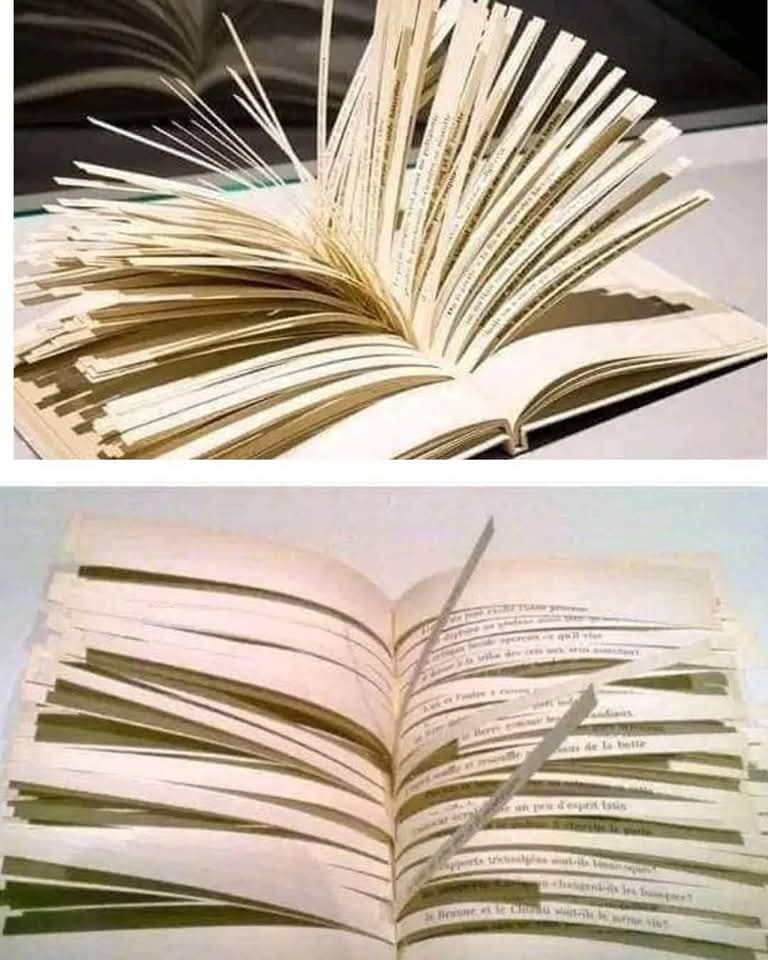
In 1960, the French writer Raymond Queneau introduced what is probably the world’s longest book. It’s called *Cent mille milliards de poèmes* (A Hundred Thousand Billion Poems), and it consists of just ten pages, each containing a sonnet. The verses all share the same rhyme pattern and are printed on strips, allowing readers to combine lines from different sonnets.
This setup results in a total of 10¹⁴ possible combinations, meaning the book contains one hundred trillion unique poems. The implication is that no one will ever manage to read the entire book, even with the greatest effort, as it would take millions of years to match up all the possible poem combinations—without taking breaks for eating, sleeping, or reading anything else. And all of this comes from just ten pages!
Each mix you create will result in a coherent sonnet with proper stanzas, rhythm, and rhyme. Moreover, it’s highly likely that any randomly selected poem will be one that no one has ever read before. Queneau himself claimed that if it takes about 45 seconds to read one sonnet and another 15 seconds to prepare the next, it would take around 200 million years to read through all the possible combinations.
Credits: Leer Es Un Placer
(Sergio Blesa Martin-Pero)
Key Facts About the Book:
1. Concept:
• The book consists of 10 sonnets, each with 14 lines.
• Each line of the sonnets is printed on a strip, allowing the reader to mix and match lines from different sonnets while maintaining a coherent rhyme and rhythm.
2. Number of Possible Combinations:
• Since each sonnet has 14 lines and any of the 10 sonnets’ lines can replace each line, the number of possible combinations is:
10^{14} \, \text{(100 trillion unique poems)}.
3. Impossible to Read in a Lifetime:
• If it takes approximately 1 minute to read a sonnet, reading all 100 trillion combinations without breaks would take over 190 million years.
4. Purpose:
• The book was designed to push the boundaries of literary structure, focusing on the mathematical potential of poetic combinations.
5. Historical Significance:
• This is considered a masterpiece of constrained writing and is often associated with the Oulipo (Ouvroir de Littérature Potentielle) movement, which explores the relationship between mathematics and literature.
 Solosopher & Solosophy